
Anyone who has ever ordered printer paper or picked up a greetings card has probably noticed that not all paper feels the same. Some sheets are thin and almost see-through, while others feel sturdy and substantial in the hand. That difference comes down to grammage, and understanding it makes choosing the right paper format a much simpler task, whether you are printing a letter, designing a brochure or ordering business cards.
Key takeaways
- Grammage, measured in grams per square metre (GSM), serves as the global standard for defining the weight and thickness of different types of paper.
- Standard office documents typically use paper between 70 and 100 GSM, while lighter sheets are suited for newsprint and heavier stocks are preferred for promotional materials or business cards.
- You can calculate the weight of an individual sheet by multiplying the paper’s area in square metres by its GSM rating.
- The choice of grammage affects not only the physical feel of a document but also its durability, print quality, and suitability for specific applications like brochures or envelopes.
- Practical methods for verifying paper weight include using a kitchen scale to measure a small stack of sheets or referring to the total ream weight provided by manufacturers.
- Understanding the relationship between paper formats and grammage allows users to make informed decisions when purchasing materials for both personal and professional printing tasks.
Understanding paper grammage and weight measurements
When people talk about the weight of paper, they are usually referring to its grammage, which is the standard way of describing how heavy or light a sheet feels. Grammage is simply the number of grams that one square metre of a given paper weighs, which is why it is often shortened to GSM in catalogues and print shops. A sheet described as 80 GSM paper is measured against that same one metre by one metre sample, so the figure gives a consistent reference point no matter the actual format of the sheet you are holding. This measurement is especially useful because paper comes in an enormous range of thicknesses, and without a shared standard it would be very difficult to compare one product against another.
What grammage means for your documents
In practical terms, the grammage of a sheet tells you a great deal about how it will behave once it goes through a printer or lands on someone’s desk. Lightweight papers in the range of thirty five to fifty five grams are typically used for newsprint or tracing paper, since they are thin and inexpensive but not especially durable. Standard office paper tends to sit between seventy and one hundred grams, which is light enough for everyday printing yet sturdy enough to handle regularly without tearing. Heavier grammages, often starting around one hundred and twenty grams and climbing well beyond two hundred, are reserved for documents that need to feel more substantial, such as covers, certificates or promotional materials. Choosing the right grammage for your documents is therefore less about guesswork and more about matching the weight to the job the paper needs to do.
How to calculate the weight of a single sheet
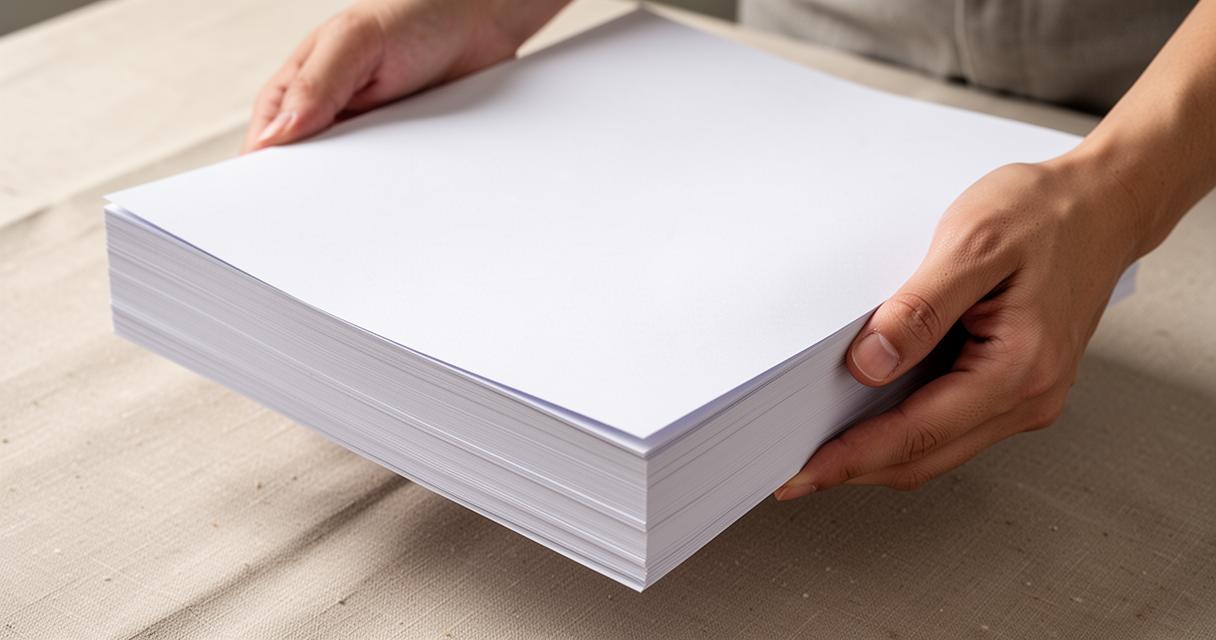
Working out the actual weight of one sheet is a simple calculation once you know its grammage and its format. Because GSM refers to a full square metre, you need to measure the length and width of your sheet in metres, multiply those two figures together to get the area, and then multiply that area by the grammage. An A4 sheet measures two hundred and ten by two hundred and ninety seven millimetres, which works out to a modest fraction of a square metre, so even paper with a relatively high grammage will still produce a fairly light individual sheet. This is a handy calculation to keep in mind if you are trying to estimate postage costs or simply curious about how much a stack of papers in your cart might weigh once it arrives.
Choosing the Right Paper Weight for Different Uses
Picking the correct weight is not just about feel, it is also about function. The wrong choice can leave a document looking flimsy or, conversely, make something unnecessarily thick and expensive to produce. The good news is that most printing projects fall into fairly predictable categories, so a bit of familiarity with common grammages makes the decision straightforward.
Matching grammage to print quality and document type
Standard printer paper used for everyday letters and reports usually sits in a comfortable middle range, offering enough opacity that printed text does not show through the back while remaining light enough for bulk use. Flyers and promotional posters often call for something slightly heavier, since a bit more body helps the print quality stand out and gives the material a more premium feel in the hand. Magazine covers and brochures typically move into even heavier territory, bridging the gap between standard paper and true cardboard. For items such as invitations or business cards, the weight climbs further still, often into a thick card stock that feels closer to thin cardboard than ordinary paper. A quick glance at a list of typical grammages can be useful when planning a project:
- Lightweight papers for notepads and internal documents
- Mid-range grammages for standard office printing
- Heavier stock for posters, brochures and covers
- Card-like thickness for invitations and business cards
Image quality also benefits from the right paper choice, since glossy or matte finishes behave differently depending on the thickness and density of the stock beneath them.
Paper thickness considerations for envelopes and professional materials
Envelopes deserve a mention of their own, since they need enough thickness to protect what is inside without becoming bulky or difficult to seal. Professionals who regularly send out letters, certificates or promotional packs tend to favour envelope formats that correspond neatly to the sheet size being enclosed, which keeps everything looking tidy and consistent. Thickness and grammage are closely related but not identical, since two papers of the same weight can still feel different depending on how they are manufactured, so it is worth handling a sample before committing to a large order.
Practical Methods to Weigh and Measure A4 Sheets
If you want to check the grammage of paper you already own rather than relying on the label, there are a couple of simple approaches that do not require specialist equipment.

Using a kitchen scale to determine paper weight
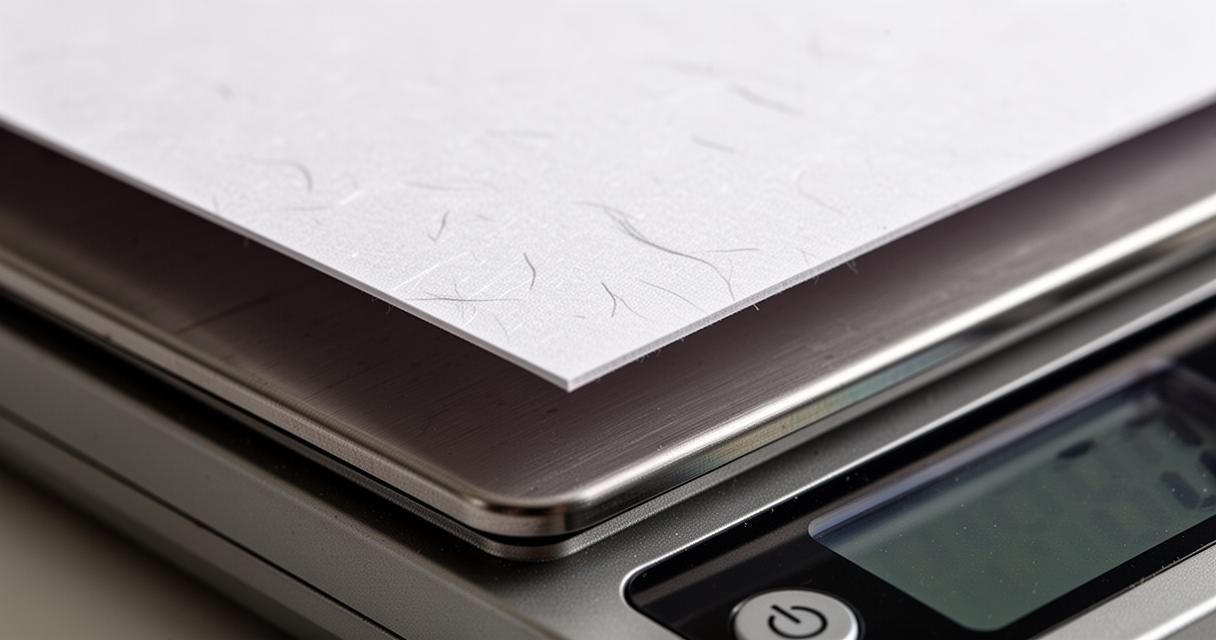
A regular kitchen scale is often accurate enough to weigh a small stack of sheets, provided it can register weights down to a single gram. By weighing a known number of sheets and dividing by that number, you can get a reasonable estimate of the weight of one sheet, then use the area calculation mentioned earlier to work out the equivalent GSM. It is not laboratory precision, but for a quick check before you print or recycle a batch of old documents, it does the job perfectly well.
Calculating ream weight and understanding format dimensions
A ream, which is a bundle of paper typically containing five hundred sheets, gives another useful reference point, since many manufacturers print the ream weight directly on the packaging. Knowing the dimensions of common formats, from the compact A6 size through to the large A2 and A1 sheets used for posters, makes it much easier to compare products when you visit a shop or browse online, and many retailers now offer convenient click and collect options for bulkier card and paper orders. Whether you are stocking up locally or simply replacing a worn out ream for the printer at home, a basic grasp of grammage and format takes the guesswork out of the choice.