
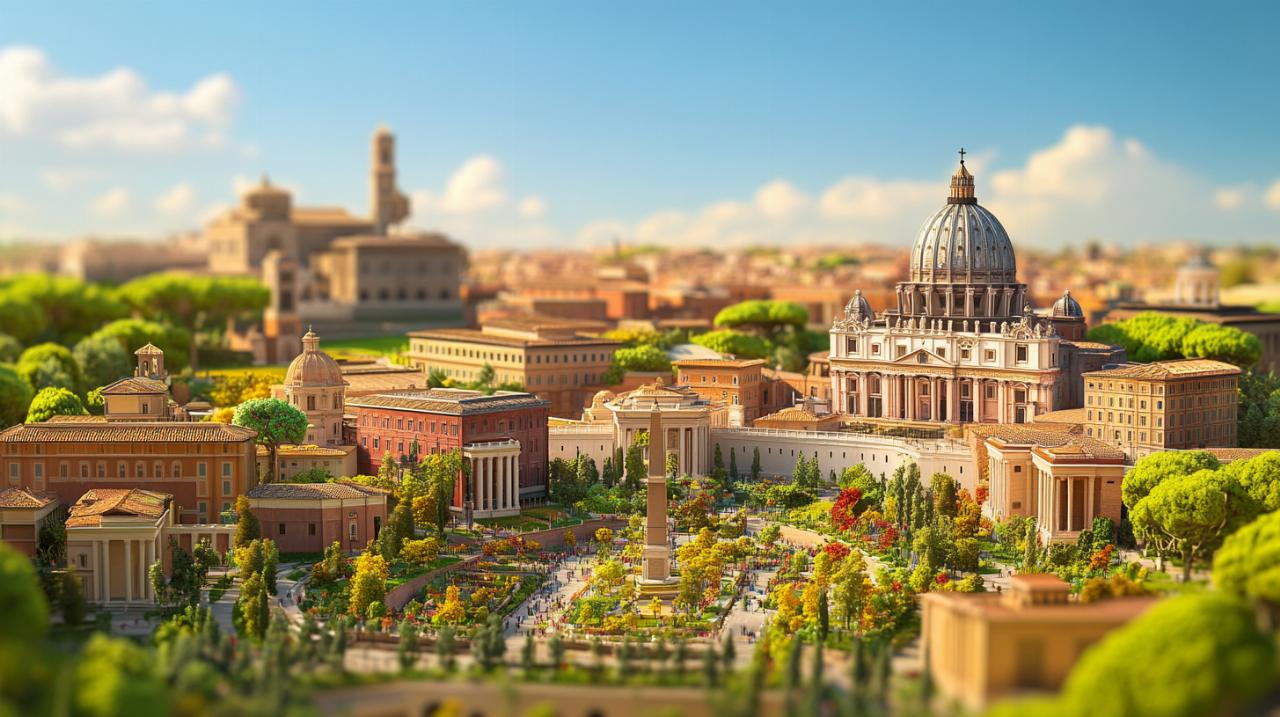
Tucked away within the bustling heart of Rome lies a sovereign nation so compact that one could walk its entire breadth in mere minutes. This tiny enclave, renowned for its profound religious significance and breathtaking artistic treasures, holds the remarkable distinction of being the smallest independent nation-state on the planet. Despite its diminutive size, this country operates with a fully functioning economy, a unique governance structure, and a population whose citizenship is unlike any other. Understanding how such a minuscule territory sustains itself economically whilst maintaining its global influence offers a fascinating glimpse into the world of microstates and their remarkable resilience.
The world's tiniest nations: comparing vatican city, monaco, and other micro-states
When exploring the question of which country claims the title of the world's smallest, Vatican City emerges as the undisputed champion. This ecclesiastical administration, nestled entirely within the Italian capital, occupies a mere fraction of a square kilometre. Yet it is not alone in the realm of exceptionally small sovereign territories. Across Europe and beyond, a handful of nations challenge conventional notions of what constitutes a country, each boasting unique characteristics and governance models that set them apart from their larger neighbours.
Vatican city's record-breaking surface area and population figures
Vatican City covers an astonishingly compact area of just 0.44 square kilometres, which translates to roughly 0.17 square miles. To put this into perspective, the entire nation could fit comfortably within many large city parks found in major metropolitan areas. The population of this sovereign state is equally remarkable, numbering fewer than one thousand residents. Current estimates suggest that around 825 individuals call the Holy See their home, making it not only the smallest country by land area but also the least populated country in the world. What makes this population figure even more intriguing is the fact that citizenship is not acquired through birth or traditional naturalisation processes. Instead, it is granted exclusively to those who serve the Church or work within the Vatican administration, creating a community whose membership is tied directly to religious service and ecclesiastical duties.
The landscape within this diminutive nation is dominated by iconic structures that draw millions of visitors annually. St Peter's Basilica stands as the spiritual centrepiece, with a capacity to accommodate up to sixty thousand worshippers within its magnificent interior. Adjacent to this architectural marvel lies St Peter's Square, a vast open space capable of holding as many as three hundred thousand people during papal addresses and religious celebrations. The Vatican Museums house one of the world's most extraordinary art collections, whilst the Sistine Chapel showcases Michelangelo's masterful ceiling frescoes, which continue to inspire awe in visitors from every corner of the globe. The Vatican Gardens offer a tranquil retreat within the walled enclave, providing a verdant contrast to the surrounding urban environment of Rome.
How Monaco and Small Island Nations Measure Up Against the Holy See
Whilst Vatican City holds the crown for the smallest territory, several other nations compete for recognition amongst the world's tiniest countries. Monaco, the glamorous principality perched on the French Riviera, is frequently mentioned in discussions of European microstates. Known internationally for its casinos, luxury yachts, and the prestigious Formula 1 Grand Prix, Monaco occupies a slightly larger area than Vatican City but remains extraordinarily compact by any standard. Its Mediterranean climate and status as a financial hub attract wealthy residents and tourists alike, creating an economy vastly different from that of the Holy See.
Beyond Europe, several small island nations in the Pacific Ocean also rank amongst the world's least populated countries. Tuvalu, Nauru, and Palau each possess unique characteristics that distinguish them within the international community. These island states face particular challenges related to climate change and economic sustainability, relying heavily on fishing rights, foreign aid, and remittances from citizens working abroad. Their populations, whilst small, are nonetheless considerably larger than that of Vatican City, and their governance structures reflect more conventional forms of democratic administration.
Other European microstates warrant mention in this comparison. San Marino claims the distinction of being one of the world's oldest republics, with a history stretching back over a millennium. Liechtenstein combines alpine scenery with a reputation for being tax-friendly, whilst Andorra has built its economy around ski resorts and duty-free shopping opportunities. Malta, though larger than these examples, still qualifies as one of Europe's smaller nations, offering visitors a Mediterranean climate alongside remarkable archaeological sites. Luxembourg serves as a major financial hub despite its modest size, whilst Iceland, Cyprus, and Estonia each bring their own unique features to the table, from volcanic landscapes and geothermal spas to ancient ruins and digital innovation.
The vatican's unique economic model: how the world's smallest country sustains itself
Operating a sovereign nation, regardless of size, requires substantial financial resources to maintain infrastructure, provide services, and support its population. Vatican City has developed a distinctive economic model that diverges significantly from conventional national economies. Without natural resources, industrial production, or traditional taxation systems, the Holy See relies on a combination of religious tourism, cultural heritage, and the generous support of the global Catholic community to fund its operations and preserve its priceless artistic treasures.
Religious tourism and museum revenue: the primary income streams
Tourism stands as the cornerstone of Vatican City's financial sustainability. Millions of visitors from around the world journey to this tiny enclave each year, drawn by its profound spiritual significance and unparalleled artistic heritage. The Vatican Museums attract particularly large numbers of tourists, with entrance fees generating substantial revenue that helps support the city-state's annual budget, which is estimated at approximately one hundred and seventy-five million pounds. The museums house an extraordinary collection of artworks spanning centuries, including priceless pieces from the Renaissance and beyond. The Sistine Chapel alone justifies the visit for many travellers, as Michelangelo's ceiling frescoes represent one of humanity's greatest artistic achievements.
St Peter's Basilica, whilst free to enter for worship, benefits indirectly from the tourist economy through donations and the broader commercial activity that pilgrims and visitors bring to the area. The sheer scale of religious events, particularly those led by Pope Francis, draws enormous crowds to St Peter's Square, creating opportunities for the sale of religious mementoes, literature, and other items that support the Vatican's finances. The cultural and spiritual significance of these sites cannot be overstated, as they represent centuries of Christian tradition and artistic excellence that continue to resonate with believers and art enthusiasts alike.
Papal Donations, Postage Sales, and Financial Investments Supporting the City-State
Beyond tourism, Vatican City benefits from a diverse array of income sources that reflect its unique position within the global Catholic Church. Donations from the faithful constitute a significant portion of the Holy See's revenue, with Catholics worldwide contributing to Peter's Pence and other charitable collections that support papal activities and humanitarian initiatives. These voluntary contributions demonstrate the deep connection between the Vatican and its global community of believers, providing financial support that enables the Church to maintain its presence and carry out its mission.
The sale of stamps and souvenirs represents another noteworthy revenue stream. Vatican City issues its own postage stamps, which are highly sought after by collectors around the world. Sending a postcard from the smallest country in the world has become something of a tradition for visitors, creating a niche market that generates steady income. Souvenir shops within the Vatican offer religious items, books, and mementoes that appeal to pilgrims and tourists, contributing further to the economic sustainability of the enclave.
Financial investments and property holdings also play a role in supporting Vatican City's economy. The Holy See maintains a portfolio of assets that generates returns to supplement other income sources. These investments are managed with an eye towards ethical considerations and long-term stability, reflecting the Vatican's commitment to responsible stewardship of its resources. Additionally, the city-state benefits from various agreements with Italy that address practical matters such as utilities and services, creating a cooperative relationship that acknowledges the Vatican's sovereignty whilst recognising its physical location within Rome.
Governance and Daily Life Within the World's Most Compact Country
The governance of Vatican City reflects its dual nature as both a sovereign state and the spiritual headquarters of the Catholic Church. This unique arrangement creates a population structure and administrative system unlike any other nation, where citizenship, residency, and daily operations are all intertwined with religious service and ecclesiastical administration. Understanding how life functions within such a confined space offers insights into the remarkable efficiency required to maintain a fully independent nation on such a diminutive scale.
The Population Structure: Citizens, Residents, and Workers in Vatican City
The population of Vatican City is characterised by its extraordinary selectivity and transience. Citizenship is granted exclusively to individuals serving the Church or working within the Vatican administration, meaning that residency is inherently temporary and tied to one's official duties. This creates a community composed primarily of clergy, members of the Swiss Guard, and lay employees who perform essential functions within the city-state. The demographic composition shifts as individuals complete their service or are reassigned to other locations, creating a constantly evolving population that nonetheless maintains continuity through shared purpose and institutional memory.
Beyond the official residents, thousands of workers commute into Vatican City each day from Rome and surrounding areas. These individuals provide services ranging from maintenance and security to administrative support and museum operations. The distinction between citizens, residents, and daily workers creates a complex social fabric that must be carefully managed to ensure smooth operations. Interestingly, even within such a small and controlled environment, social challenges persist, with homeless individuals occasionally seeking refuge within the Vatican's boundaries, highlighting the pastoral concerns that the Church addresses even within its own territory.
Managing essential services across just 0.44 square kilometres
Maintaining the infrastructure and services of a sovereign nation, even one as small as Vatican City, requires meticulous planning and coordination. Despite its compact size, the enclave must provide all the essential functions of a state, including security, utilities, communications, and transportation. The Swiss Guard, whose colourful Renaissance-era uniforms are instantly recognisable, provides security and ceremonial duties, upholding a tradition that spans centuries. Modern security measures complement these traditional roles, ensuring the safety of the Pope, residents, and the millions of visitors who pass through each year.
Utilities such as water, electricity, and waste management are coordinated through agreements with Italian authorities, reflecting the practical necessities of operating a landlocked microstate. The Vatican maintains its own postal service, issuing distinctive stamps and operating post offices that serve both residents and tourists. Telecommunications infrastructure ensures connectivity with the wider world, enabling the Holy See to maintain its global presence and communicate with Catholic communities across continents.
The Papal Corridor, a historic passageway connecting the Vatican with Castel Sant'Angelo, serves as a reminder of the defensive considerations that once shaped life within these walls. Today, the focus has shifted towards cultural preservation and religious service, with every square metre of the territory serving a specific purpose. The Vatican Gardens provide not only aesthetic beauty but also space for contemplation and retreat, essential for those engaged in the demanding work of ecclesiastical administration. The efficient use of limited space demonstrates how thoughtful design and careful management can maximise functionality even within the most restrictive geographical constraints, ensuring that this tiny nation continues to fulfil its unique role on the world stage.